Ten houses in ten years in London: A story of hope over experience

The Billfold, 2013. Original article.

Ten houses in ten years in London: A story of hope over experience

Screen Shot 2014-03-01 at 15.18.15

1. Acton (1) – 6 months
The year is 2003, and two fresh graduates from Southampton roll into London to take it all on. Unfortunately they have no idea what they’re doing, which is why they’ve ended up in Acton, West London. Ten years later, this is still the worst location I’ve lived at in the capital, plus the rent there was more than what I pay now. The flat itself was very nice, but the area was thoroughly charmless and it was just ridiculous to pay £550 per month each. I cringe slightly at admitting that now, but we were new to London, a city that treats its newcomers in a way that makes you understand why it’s nicknamed ‘The Big Smoke’. My friend and I broke the contract early and have never really spoken about it since.

2. Acton (2) – 2 months
As a temporary arrangement, I moved in with my boyfriend and our other friend in their cream-carpeted semi-detached Victorian facing a very loud road. The rent here was the same as the first Acton flat, but as we split it threeways it was a very manageable £360. The bus stop outside meant you couldn’t watch TV with the windows open though, and everything was beyond walking distance. I was unemployed during these two months and thoroughly miserable; I don’t want to talk about it.

3. Chiswick – 15 months?
The Acton Three moved up in the world, to a nice flat just next to Turnham Green tube. It’s pretty pleasant there: there was a lovely chocolate shop that sold lavender truffles, and a coffee shop on the other side of the park. The rent was the same as the previous place, as I’d learned something vital about the London market by this point: living in a crappy area doesn’t necessarily mean you save on rent. London started to agree with me while I lived in this flat. The porter looking after the block, however, did not; he regularly left notes about drying laundry being visible through the window from the road. I still don’t know what that was about.

4. Dulwich – 1 month
Temporary dwellings after breaking up with my boyfriend of nearly five years. This marked the move to South London, with its other-side-of-the-river feeling and tricky transport links. I don’t remember much about this place, other than there being a ghost in the master bedroom. We all agreed on this when discussing it in retrospect, but were too fearful to acknowledge its presence while still living in the house.

5. Camberwell – 10 months?
A spider-infested but otherwise nice basement flat on what was allegedly one of the most burglarised streets in London. Top tip: if anyone you know move to such a location, please do leave them to their ignorance; we have the Daily Mail if we want to live in paranoia. I think the rent was around £450, which was a bit expensive but okay. Positives to this flat included oak floors and the neighbours’ cat, but the endless bus journeys to get to the tube is the overarching memory, not to mention a general reason never to move back south of the river ever again. Prejudiced, yes, but that’s my opinion.

6. Spitalfields – 10 months
This little flat marked the wise, wise move to East London. I could see Spitalfields Market from the living room window, a fantastic feature which was strongly reflected in the price, meaning my boyfriend and I were financially unable to take advantage of our new and fancy location. Having said that, paying £600 for this flat would be a steal today; the gentrification is complete and Urban Outfitters has since moved in across the road. I spent a lot of time wandering around buzzy Brick Lane late at night. Every few days I’d get a bag of fresh bagels, which at 15p a pop from Beigel Bake was budget food. It wasn’t bad at all.

7. Shoreditch – 18 months?
I found this flatshare in a grimy Shoreditch council estate on the internet while in a daze, brought on by looking for a new job and a new house while also contract-bound to co-exist with my ex in the tiniest flat ever. The fact the ensuing dark-side-of-Shoreditch life worked out as well as it did was a stroke of luck; at £550 the rent even included most bills. The estate kids threw water balloons, sure, but they never managed to hit me, and Shoreditch was the perfect place to live when I was single and needed a crowd on my street to walk through when coming home late at night.

8. Mile End – 10 months
Really nice flat, this, and the high-speed trains from Essex which brushed up against the wall every 15 minutes provided this interesting suction effect in the air. The rent was discounted because the recession had just hit, and at £450 it was a steal for such a spacious flat, close to both the tube and the park. I lived with a friend who was a cleaning nut, and he deemed my domestic efforts so insufficient that he preferred to do it all himself. It seemed like a good arrangement at first, until his control-freakery leaked into other aspects of our lives and it became absolutely necessary for me to leave. I’d go into detail, but I seem to have blocked out most of it. Safe to say, this is a cautionary tale.

9. Limehouse – 22 months
My longest stay at a London address to date. By this point I’d started to notice how a good flat would invariably reveal an issue to do with plumbing or the other humans and lead to short stays, while the shitty flats tended to result in long stays. This was no exception: the company was good, but the Poplar border-location was terrible and every single household appliance broke while we lived there – some more than once. A constant feature was how the shower would swing rapidly between hot and cold, meaning I can now wash like I’m Roadrunner. It was really cheap though, at just £420 a month, so we put up with it until the rent went up by 20% overnight and we left in shock. It was probably for the best.

10. Stoke Newington – 16 months and counting
My favourite house so far: it’s big, it’s full of nice people and touch wood, no major issues have yet to be identified. I mean, the mice moved on almost right away once we got the sonic repellers. If anyone’s curious, I’ve identified the key to houseshare happiness: a mixed group of three to five people, a cleaning rota and a working boiler. I moved to the Stokey-Dalston borderlands after a two-week stay at a friend’s to tide me over the search, which I actually conducted with some care this time. (In hindsight, this may have been the core problem leading to many of the previous duds.) The house is massive but the room is a shoebox; the rent reflects this and consequently I have money left to spend on airfare. I am very happy about this choice. This is also my first North London postcode, meaning I’ve done the circle. To my surprise, I absolutely love it up here. “I may never move again,” she said.

[Update: 13 houses in 15 years in London]

London hits me, it feels like a kiss

Litro Magazine, March 2014. Original article.

litroLondon hits me, it feels like a kiss
With swift, rehearsed motions I prop my bicycle onto my hip, swaying my body as a counterweight as I start the climb up the stairs. Music still blares in my left ear, too loud now there’s no traffic to drown it out, as I swing my wheels around corners, careful not to scrape the walls. At home I keep my bike in my hallway, as city dwellers do. The rustle of the traffic is still audible through thin walls and vibrating panes of glass, reminding us of the city that holds us. We love and hate the city, the London planet that’s our home.

I live out East, and while I can travel for hours I rarely make it out West. It’s a different life out there, one of steady living and picnic-dense parkland, not at all like the flowering decay of the East. Here, change happens so rapidly it’s almost tangible. You don’t discover the personalities of the city until you’ve been here a while, and by then you shrug at the irony of having moved to London to explore the multitude, only to find yourself ensconced in a small pocket of this giant metropolis. We sought variety but once we arrived, we discovered what we really wanted was to find our people and to make a home. We build walls around the East London village and scowl at strangers.

When visitors come from out of town we take them to the core of London, to the centre that all the London tribes share because no one actually live there. At least no real people do, only the Queen and her knights, but us mortals are allowed to walk in the streets and admire the tall, pale buildings. Old trees stretch up along the walls, making a good effort but it’s not the green that dominates the city. It’s not the stone and glass either, it’s about something else. The charm of the Big Smoke starts somewhere in the cracked pavements, continuing up the grimy streets and random alleyways, into the little squares with their cemented benches and unexpected moments of calm. We potter around the city, feeling like we’re a part of something. It’s vast, this city, enough so that it sometimes feels like this is the whole world. Pass the city limits and you will drop off the known universe.

It’s a demanding love, London, draining its people with long, dusty streets and cramped buses. This isn’t a place for flowers, it’s a place that tests the human spirit. If you want it badly you can have it, but you will wince slightly with the push of each step. Out East there are no grandiose monuments and our towers are run down council estates, carrying their concrete smell and graffiti-covered corners like badges of honour. The canal weaves through the neighbourhoods, with walkways on either side and flowers living among broken bottles under the benches. Keep going and the canal becomes a river, the parkland becomes a marsh and still you haven’t left London.

When it rains, London gets wetter than any other place in the world. Tourists are startled at the fervour with which the water splashes down, how it pummels the ground. On a good day it goes on for ten minutes and it’s gone, on a bad day it doesn’t stop and it keeps going for several more. My hallway is lined with damp shoes, one added per day of rain until I run out of dry footwear and have to circle back to the least wet pair. I scrunch up newspaper and stuff it into the shoes to soak up some of the water, looking over at my sandals and wonder when the weather was ever good enough for them to get worn down like that. When London rains, it’s hard to remember a time when the damp didn’t creep into your bones.

Then it stops raining, the pavements dry and the dust kicks up again like nothing ever happened. I walk across Waterloo Bridge and realise for the hundredth, for the thousandth time, how much I love this city. Late Sunday afternoons in Victoria Park and all you can hear is the rustling of the leaves and the nattering of the Eastenders, in their loafers and wayfarers next to their knocked-over fixie bikes. A year passes and I don’t move, but the city moves around me and change is constant. The universe circles around London and when I go away I can feel the pull of its gravity. As much as I love to travel, on the plane back to London there’s always a feeling of things righting themselves. Knowing a slow journey in a grimy train is ahead of me, I drag my bags across the carpeted arrivals halls of Gatwick airport, happy to be home. I’m grateful for London, she makes me what I am.

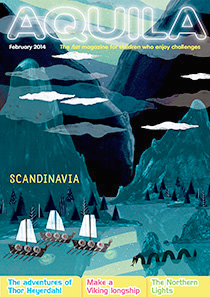
Thor Heyerdahl

In Aquila Children’s Magazine (ages 7-12), February 2014.

scandinavia-feb14u

The adventures of Thor Heyerdahl
Norwegian explorer Thor Heyerdahl crossed the open ocean on wooden rafts, risking his life to prove that people in pre-historic times could have travelled the world.

When a young, unknown researcher named Thor Heyerdahl claimed people from South America had travelled to the islands in the Pacific Ocean, no one took him seriously. Most scientists were certain: the people who live on these islands, known as Polynesia, had come from Asia. This was because pre-historic South Americans didn’t have any boats which could have survived the long and dangerous journey.

Heyerdahl quickly understood there was only way to prove his theory: travel across the ocean himself. A crazy idea for sure, but Heyerdahl had a raft built, using the same materials and methods as the pre-historic South Americans would have used. With a crew of seven, Heyerdahl set out from Peru in April 1947, letting the sea currents and wind take them where it wanted. The Kon-Tiki raft travelled 7,964 kilometres before reaching Polynesia, 101 days later. Heyerdahl had proved he was right: pre-historic South Americans could have crossed the Pacific Ocean.

The young explorer
Thor Heyerdahl was born in Southern Norway in 1914, in the town of Larvik. It was his mother, Alison, who inspired him to become a researcher. She was a chairwoman of the city’s museum association, and a supporter of Charles Darwin’s theory of evolution. Thor created a small museum in the office of his father, a master brewer also called Thor. Young Thor decided to become an explorer when he was eight, and went to the University of Oslo to study biology and geography. There Thor met a collector who had travelled in Polynesia, a friendship which inspired Thor’s interest in the region. Soon after, he went to the island of Fatu-Hiva and lived there for one year.

Heyerdahl wanted to discover how Polynesia originally became filled with plants, trees and animals. He realised the winds and ocean currents were constantly coming from South America, and that this had consequences for plant life. But it was only when he found the same types of statutes on the islands as previously found in South America, that Heyerdahl started wondering: maybe the winds and currents brought more than just plants from South America to Polynesia? Maybe they brought people too?

Kon-Tiki
This was when Heyerdahl decided to prove this theory by setting sail on the Kon-Tiki. In the documentary he made about the trip he talks about how people doubted whether the crew would survive. After all, no one could save them once they headed out into the open sea on their simple raft, made from nine balsa tree logs with a small hut on top. “On calm days, we would float like a cork,” said Heyerdahl. “On smooth days, it felt like utopia.” But not every day was calm. Lorita, the seasick parrot who had come along from Peru, was lost in a storm. Swimming was dangerous because of the strong currents, not to mention the sharks which frequently followed the raft. The whales were dangerous too, as they sometimes topple small boats at sea. Heyerdahl admitted there were times he feared for his life on the Kon-Tiki, as he had been afraid of water as a child and never really learned how to swim.

Ra and Tigris
Heyerdahl became famous after the Kon-Tiki mission. While most scientists still disagreed with his theory that South Americans had travelled to Polynesia, at least it was clear it was possible. Heyerdahl was a big believer in the diffusionist theory: the idea that pre-historic civilisations had been in contact with each other. This could explain why groups who lived very far apart, like the Egyptians in Africa and the Mayans in South America, both built pyramids. But most scientists, both during Heyerdahl’s time and now, are separatists: they believe these similarities are coincidental, probably occurring because people all over the world have a lot in common.

Heyerdahl’s next sea voyage came in 1969, after he found pictures of reed boats during his archeological digs on Easter Island in Polynesia. Reed boats were also common among Mediterranean civilisations, meaning people could have travelled from there to South America, and then to Polynesia. Heyerdahl decided again to prove the skeptics wrong, and built a boat out of reeds and set sail from Morocco. Ra 1 had to be abandoned after 5,000 kilometres, but Heyerdahl was undeterred. Ten months later he tried again with Ra 2, which successfully reached South America.

Heyerdahl’s largest reed boat was built in 1977, this time with the ability to navigate instead of just drifting. The Tigris set out to prove it had been possible for people in the ancient civilisations of Mesopotamia, Egypt, and the Indus Valley to be in contact with each other. After five months at sea, the Tigris ended its voyage by the Red Sea, where Heyerdahl burned the proud ship in protest of the wars happening in the surrounding countries.

The biggest adventure
People describe Heyerdahl as a charismatic man with massive amounts of energy. But in video interviews he comes across as modest, almost shy, using formal language and always determined to make us understand: this is about science. For Heyerdahl, his voyages were also a message for people to work together. His crews on Ra and Tigris were all from different countries sailing under the United Nations flag, proving that people born to different places, habits and religions can work together. “Each of us were depending on the others’ friendship and help to survive. We knew if one of us was unwell, it would affect us all. That we all got along so well, that was the greatest part,” said Heyerdah, in an interview on Norwegian TV. “When you get to the bottom of it, to the big questions of life and death, people are so similar. We are all slices of the same loaf.”

During the Ra voyages, Heyerdahl became concerned with pollution of the world’s waters, as the crew found hardened clumps of tar floating in the water nearly every day of the 57-day-long trip. Heyerdahl’s reports were an important wake-up call for the international community about the dangers of pollution. “We seem to believe the ocean is endless. We use it like a sewer,” said Heyerdahl. Remaining a vocal advocate for the environment for the rest of his life, Heyerdahl was also a tireless supporter of international collaboration: “Borders – I have never seen one. But I have heard they exist in the minds of some people.”

Heyerdahl died in 2002 when he was 87 years old, living with his third wife Jacqueline in Italy. He had five children from two previous marriages: Bjørn, Thor Junior, Annette, Marian and Helene Elisabeth. While the theory of contact between pre-historic societies has now largely fallen out of favour, Heyerdahl continued his work until his death, convinced he was right. We may never know for sure, but last year research from the University of Oslo provided clues. Blood samples from the current inhabitants of Polynesia show they are mostly descended from Asia, but some of them have South American genes too. So it seems Heyerdahl was at least a little bit right.

photo(1)

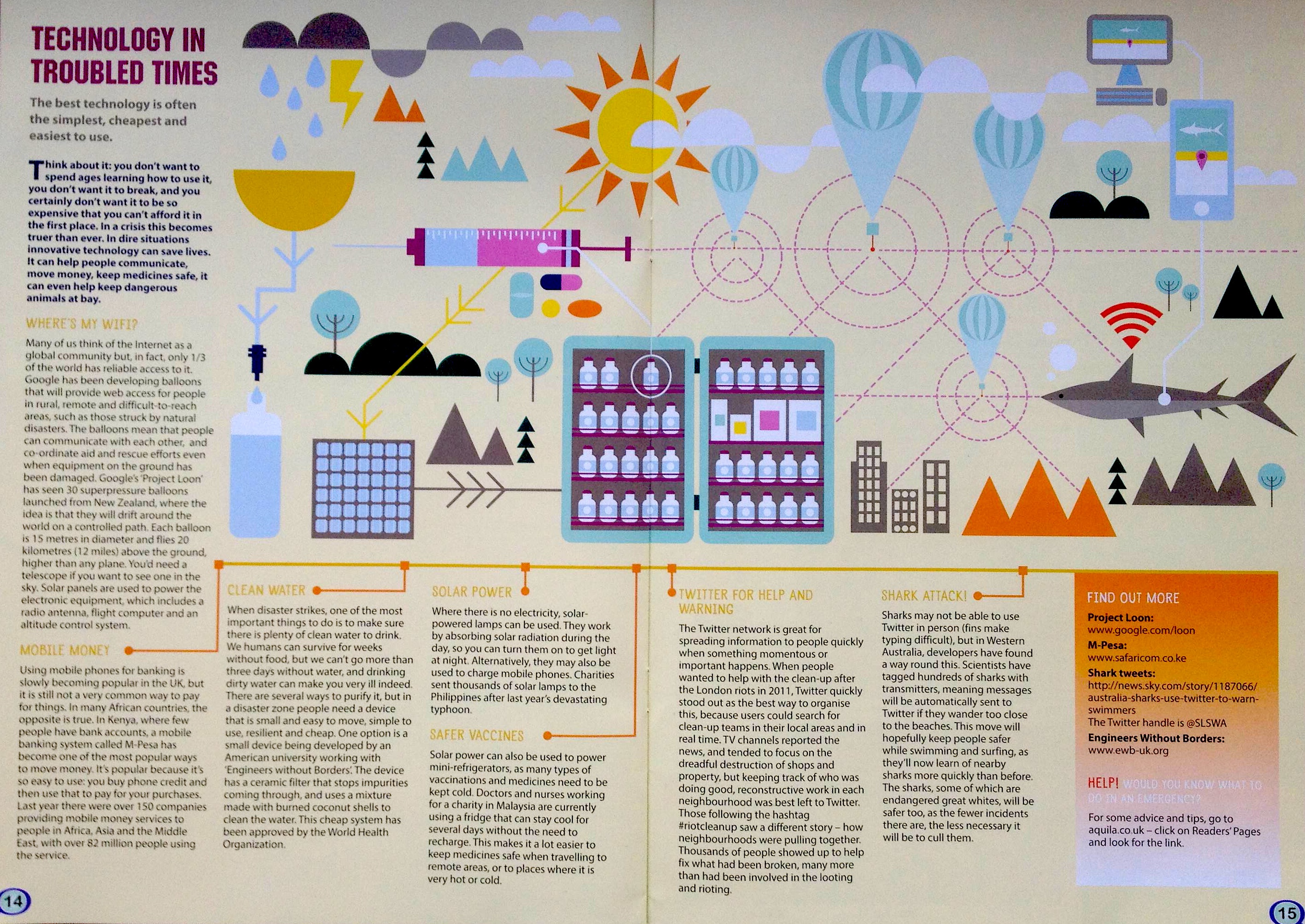
Technology in times of crisis

In Aquila Children’s Magazine (ages 7-12), March 2014.

aquila2Technology in times of crisis
The best technology is often the one that’s the simplest, cheapest and easiest to use. Think about it: you don’t want it breaking, you don’t want to spend ages learning how to use it, and you certainly don’t want it to be so expensive you can’t afford it in the first place. In a crisis this is true more than ever, as good technology can be priceless by helping people talk to each other, move money, keep medicines safe, and even keep sharks at bay.

Balloon internet and mobile money
To bring the internet to remote areas, Google has been developing balloons that will provide web access for people on the ground below. This is a great idea for areas struck by natural disaster, as people can communicate with each other, and coordinate aid and rescue efforts when equipment on the ground has been damaged. Google’s ‘Project Loon’ has seen 30 superpressure balloons launched from New Zealand, where the idea is that they will drift around the world on a controlled path. Each balloon is 15 metres in diameter and fly 20 kilometres above ground, higher than any plane. Solar panels are used to power the electronic equipment, which includes a radio antenna, flight computer, and an altitude control system.

Using mobile phones for banking is slowly becoming popular in the United Kingdom, but it is still not a very common way to handle money. But in many African countries, the opposite is true. In Kenya, a mobile banking system called M-Pesa has become one of the most important tools to move money. The reason for its popularity is because it’s so easy to use: you buy phone credit, and then use that to pay for things on your phone. There is no need to have a debit card, which is another reason the system has become so widespread: most people in Kenya don’t have a bank account, but lots have mobile phones. Last year there were over 150 companies providing mobile money services to people in Africa, Asia and the Middle East, with over 82 million people using the service.

Clean water and safe vaccines
Making sure there is plenty of clean water to drink is probably the most important thing in a disaster. We can survive for weeks without food if we have to, but we can’t go more than three days without water. There are several ways to purify water, but in a disaster you need one that is small and easy to move, simple to use and not breaking too easily, and probably most importantly: cheap. One option is a small device being developed by an American university working with Engineers Without Borders. The device has a ceramic filter that stops contaminants from coming through, and uses a mixture with burned coconut shells to clean the water by stimulating an active-carbon process. The cheap system has been approved by the World Health Organisation.

When there is no electricity, solar-powered lamps can be used. They work by absorbing solar radiation during the day, so they can emit light at night. Alternatively, they can be used to charge mobile phones. Charities sent thousands of solar lamps to the Philippines after last year’s typhoon. Solar power can also be used to power mini-refrigerators, as many types of vaccinations need to be kept cold. Doctors and nurses working for a charity in Malaysia are currently using a fridge that can stay cool for several days without needing re-charging. This makes it a lot easier to keep medicines safe when travelling to remote areas, or to places with extreme temperatures.

Twitter for help and warning
The Twitter network is great for spreading information to people quickly when something happens. A good example of this is when people wanted to help with the clean-up after the London riots a couple of years ago. Twitter became the best way to organise this, because people could search for clean-up teams in their local area. TV would report the news, but keeping track of who was doing what in each neighbourhood was best left to Twitter. Another point is how the TV channels focused on the destruction, while those following the #riotcleanup hashtag on Twitter saw a different story: how neighbourhoods were pulling together, and thousands of people showed up to fix what had been broken.

Sharks may not have hands to type messages to send to Twitter, but in Western Australia, that is not a problem. Scientists have tagged hundreds of sharks with transmitters, meaning messages will automatically be sent to Twitter if they go too close to the beaches. This will hopefully keep people safer while swimming, as they now learn of nearby sharks a lot quicker than they used to. The sharks, many of them being great whites, are safer too, as beach security is an important issue in Australia. Fewer incidents with swimmers and surfers would make it easier to defend sharks from being culled.

emergencyaid-mar14u

Matthew Day Jackson

Published in This Is Tomorrow, 2011. Original article here.

JACKSONMatthew Day Jackson: Everything leads to another
Hauser & Wirth, London

Just as Monet’s paintings of waterlilies were originally presented in a long line, Matthew Day Jackson’s impressions of the surface of the moon stretch out across an entire wall of the Hauser & Wirth gallery. One panel follows another to cumulative effect, but as you stand in front of ‘Reflections of the Sky’, the enormity of the symbolism actually makes the piece feel almost on the small side. The subtle pattern is compelling to look at, to the degree that even as you are standing in front of it, you somehow want more.

Matthew Day Jackson has a knack for drawing in his audience. With ‘Everything Leads to Another’, the artist is interested in beauty that carries a counterpart, ‘so closely that it is difficult to delineate one from the other’. Works by the Brooklyn artist fill both galleries at the Savile Row space, with the North gallery dominated by large-scale pieces such as the moonscape and ‘Axis Mundi’, a manipulation of the cockpit of a B29 aircraft bomber. Positioned next to the moonscape, the polished cockpit segment evokes thoughts of space travel, an impression strengthened by an interior filled with strange, neon-coloured anthropological artefacts, as a nod to the undiscovered.

If the North gallery looks for the big picture through humanity’s push outwards, the South gallery takes the opposite approach and searches for answers by looking inward. With the notion of mortality running as a central theme, the artist has used his own body to examine what it is we are made from. Especially here is it tempting to touch Jackson’s sculptures, which are rich in texture and you suspect you may be missing out on a layer of the experience by being restrained to simply looking.

The central figure is a life-sized body, carved like a topographical map. The main body is made from a concoction of materials, including wood, wax and plastic, with carefully crafted internal organs sitting heavy in the middle. Four images surround the central figure, each presenting the body in different manners. The body made from meat set in jelly is the most uncomfortable to look at, to the extent that the depiction of the burning corpse is a relief. There is a discomfort that comes with being confronted with the messiness and the vulnerability of the body mechanism, but in Jackson’s world also this is a counterpart indistinguishable from the related beauty.

The exhibition concludes with a video piece, presented in a retro-style living room set. A documentary-style film, ‘In Search of … Ghosts’, plays surrounded by artwork, including Jackson’s ‘Life’ magazine covers with patches of embroidery. From the sofa in the artist’s fake living room, you are surrounded by references to space exploration and theories about the unknown; ‘who are we, and where do we come from,’ asks the video narrator, ‘what lies waiting in our future?’ But as the video continues to ponder the paranormal, it seems that whether we look into space or within our own bodies, the answers may well be the same. As Jackson points out, everything leads to another, and we can see our own reflection on every surface.

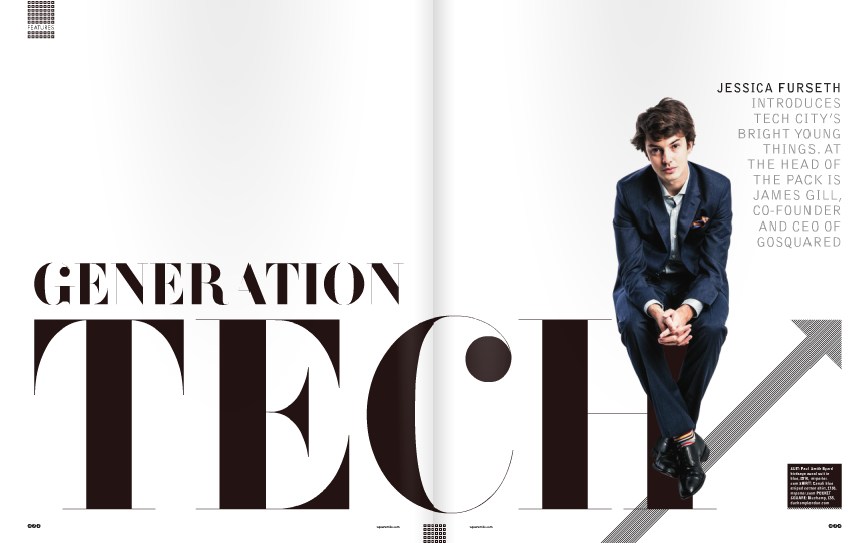
Generation Tech

Cover story for Square Mile Magazine, December 2013. Original article here (p75-79).

SMGeneration Tech:
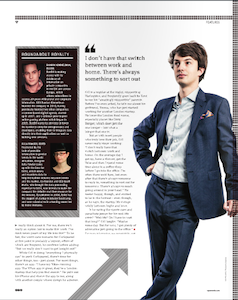
Interview with James Gill, co-founder and CEO of GoSquared

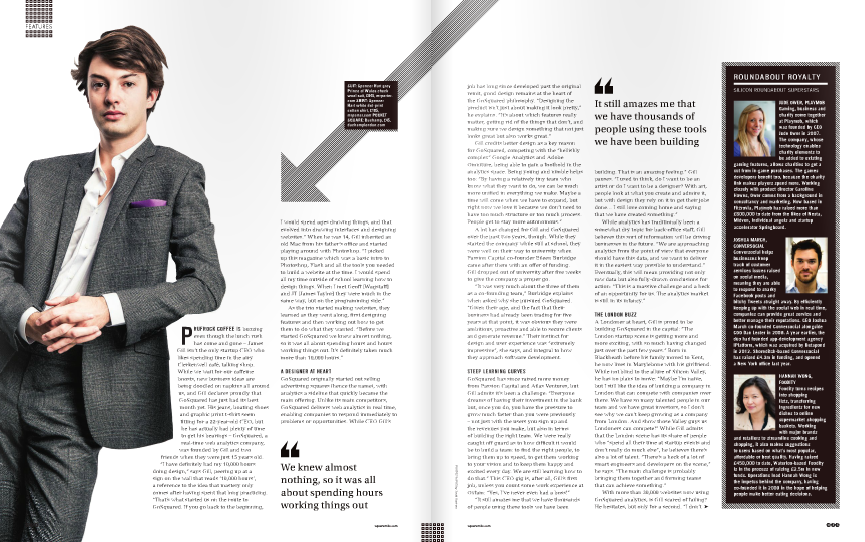
Prufrock Coffee is buzzing even though the lunch rush has come and gone, as James Gill isn’t the only startup CEO who likes hauling up in the airy Clerkenwell cafe to talk shop. While we wait for our caffeine, new business ideas are being doodled on napkins all around us, and Gill declares proudly that GoSquared has just had its best month yet. In jeans and boating shoes, his graphic print t-shirt seem fitting for a 22-year-old CEO, but Gill has actually had plenty of time to get his bearings – GoSquared, the real-time web analytics company, was founded by Gill and two friends when they were just 15 years old.

“I have definitely had my 10,000 hours doing design,” says Gill, peering up on the wall to the sign that reads ‘10,000 hours’, a reference to the idea that mastery only comes after having spent that long practicing. “That’s what started us on the route to GoSquared. If you go back to the beginning I would spend ages drawing things, and that evolved into drawing interfaces and designing websites.” When he was 14, Gill inherited an old Mac from his father’s office, and started playing around with Photoshop. “I picked up this magazine which was a basic intro to Photoshop, Flash and all the tools you needed to build a website at the time. I would spend all my time outside of school learning how to design things. When I met Geoff [Wagstaff] and JT [James Taylor] they were much in the same way, but on the programming side.” As the trio started making websites they learned as they went along, first designing features and then working out how to get them to do what they wanted. “Before we started GoSquared we knew almost nothing, so it was all about spending hours and hours working things out. It’s definitely taken more than 10,000 hours.”

GoSquared originally started out selling advertising squares (hence the name), with analytics being a sideline that quickly became the main offering. Unlike the main competitors, GoSquared delivers web analytics in real time, enabling companies to respond immediately to problems or opportunities. While CEO Gill’s job has long-since developed past the original remit, good design remains at the heart of the GoSquared philosophy: “Designing the product isn’t just about making it look pretty. It’s about which features really matter, getting rid of the things that don’t, and making sure we design something that not just looks great but also works great.”

Competing with the “hellishly complex” Google Analytics, and Adobe Omniture, Gill credits better design as a key reason GoSquared has been able to gain a foothold in the analytics space. Being young and nimble helps too: “By having a relatively tiny team who know what they want to do, we can be much more unified in everything we make. … Maybe a time will come when we have to expand, but right now we love it because we don’t need to have too much structure or too much process. People get to stay more autonomous.”

A lot has changed for Gill and GoSquared over the past two years, though. While they started the company while still in school, the trio was well on their way to university when Passion Capital co-founder Eileen Burbidge came after them with an offer of funding. Gill dropped out of university after five weeks to give the company a proper go.

“It was very much about the three of them as a co-founding team, says Burbidge when asked why she pursued GoSquared. “Given their age, and the fact that their business had already been trading for five years at that point, it was obvious they were ambitious, proactive and able to secure clients and generate revenue.” Their instinct for design and user experience was “extremely impressive”, says Burbidge, and integral to how they approach software development.

GoSquared has since raised more money from Passion Capital and Atlas Ventures, but Gill admits it’s been a challenge: “Everyone dreams of having their investment in the bank, but once you do, you have the pressure to grow much faster than you were previously. Not just with the users you sign up and the revenues you make, but also in terms of building the right team. We were really caught off guard as to how difficult it would be to build a team: to find the right people, to bring them up to speed, to get them working to your vision and to keep them happy and excited every day. We are still learning how to do that.” This CEO gig is, after all, Gill’s first job, unless you count some work experience at Oxfam: “Yes, I’ve never even had a boss!”

“It still amazes me that we have thousands of people using these tools we have been building. That is an amazing feeling.” Gill pauses. “I used to think, do I want to be an artist or do I want to be a designer? With art, people look at what you create and admire it, but with design they rely on it to get their jobs done. … I still love coming home and saying that we have created something.”

While analytics has traditionally been a somewhat dry topic for back-office staff, Gill believes this is the sort of information that will be driving businesses in the future. “We are approaching analytics from the point of view that everyone should have this data, and we want to deliver it in the easiest way possible to understand.” Eventually, this will mean providing not just raw data, but fully drawn conclusions for action: “This is a massive challenge and a heck of an opportunity for us. The analytics market is still in its infancy.”

A Londoner at heart, Gill is proud to be building GoSquared in the capital: “The London startup scene is getting more and more exciting, with so much having changed just over the past few years.” Born in Blackheath before his family moved to Kent, he now lives in the city with his girlfriend. While not blind to the allure of Silicon Valley, he has no plans of moving: “Maybe I’m naive, but I still like the idea of building a company in London that can compete with companies over there. We have so many talented people in our team and we have great investors, so I don’t see why we can’t keep growing as a company from London. And to show those Valley guys us Londoners can compete!” While Gill admits the London scene has its share of people who “spend all their time at startup events and don’t really do much else”, there’s also a lot of talent: “There’s a heck of a lot of smart engineers and developers on the scene. The main challenge is probably bringing them together and forming teams that can achieve something.”

With over 30,000 websites now using GoSquared analytics, is Gill scared of failing? He hesitates, but only for a second: “I don’t really think about it. For me there isn’t really an option but to make this work. I’ve sunk seven years of my life into this!“ To be fair, the worst case scenario for GoSquared at this point is probably a buyout, offers for which are frequent, confirms Gill: “But we really don’t want to get bought out!”

While Gill is doing “everything I physically can” to push GoSquared, there’s time for other things too, just about. For most things there’s an app: “I have my Nike+ running app. The YPlan app is great, they’re a London startup that help you find events.” He pulls out his iPhone and shows it to me, along with another couple of apps whose design he admires. Gill is a regular at the rugby to support the Harlequins, and frequently goes back to Kent to see his “amazingly supportive” parents. Before I’ve even asked he tells me about his girlfriend Emma, who has just started working for another London startup. He loves the London food scene, especially places like ‘Dirty Burger’ where they do just the one burger but what a burger it is – a well-designed concept.

But as most people who truly love their job, Gill never really stops working: “I don’t really have that switch between work and home. On the average day I get up, have a shower, get the Tube and then I spend some time alone in a coffee shop before I go into the office. I’m often there until 8pm, but even after that there’s always someone to reply to, something to sort out for tomorrow. There’s always so much going around in your head.” He seems happy though, excited to be in the hotseat, even though as he says, the startup life swings wildly between highs and lows. Is he saving the sports cars and parachute jumps for his mid-life crisis? “Mid-life? Do I have to wait that long?” Gill laughs. “Maybe someday. But for now I get plenty of adrenaline just going to the office.”

tech1tech2tech3


***
Roundabout Royalty

Jude Ower, Playmob
Gaming, business and charity comes together at Playmob, the company founded by CEO Jude Ower in 2007. The company, whose technology enables charity elements to be added to existing gaming features, lets charities get a cut from in-game purchases. The games developers benefit too, as the charity link makes players spend more. Working closely with product director Caroline Howes, Ower comes from a background in consultancy and marketing. Now based in Fitzrovia, Playmob has raised more than $1 million to date, from the likes of Nesta, Midven, individual angels and startup accelerator Springboard.

Joshua March, Conversocial
Conversocial helps businesses keep track of customer services issues raised on social media, so they can respond right away to snarky Facebook posts and bitchy Tweets. By efficiently keeping up with the social web in real time, companies can provide great service and better manage their reputations. CEO Joshua March co-founded Conversocial alongside COO Dan Lester in 2009. A year earlier the duo had founded app-development agency iPlatform, which was acquired by Betapond in 2012. Shoreditch-based Conversocial has raised $7 million in funding, and last year opened a New York office.

Julia Fowler, Editd
Frustrated with the lack of provable information to predict trends in the world of fashion, designer Julia Fowler came up with the idea for Editd. The company mines and examines data to help the fashion industry measure trends and the market. Co-founder and CEO Geoff Watts brought the data processing expertise to Editd, and now aims to make the company the definite real-time resource for the industry. Established in 2009, Editd has the support of startup incubator Seedcamp, and later raised $1.6 million in a funding round led by Index Ventures.

Damian Kimmelman, DueDil
DueDil is making waves with its database of information on private companies in the UK and across Europe, letting subscribers access 20 years of financial and corporate information on private companies. CEO Damian Kimmelman founded the company in 2010, having previously founded two companies: a London-based digital agency in 2007, and a Chinese peer-to-peer online gaming platform in 2005. DueDil wants its services to lower the barrier to entry for entrepreneurs and developers, enabling them to integrate data directly into their applications as well as building new services.

Hannah Wong, Foodity
Foodity turns recipes into shopping lists, transferring ingredients for new dishes to online supermarket shopping baskets. Working with major brands and retailers to streamline cooking and shopping, Foodity also makes suggestions to users based on what’s most popular, affordable or best quality. Having raised £450,000 to date, the Waterloo-based company is currently in the process of raising an expected £2.5 million in new funds. Operations lead Hannah Wong is the impetus behind the company, having co-founded Foodity in 2009 in the hope of helping people make better eating decisions. She previously set up meal-planning website ‘The Resourceful Cook’.

Språket nærmest hjertet

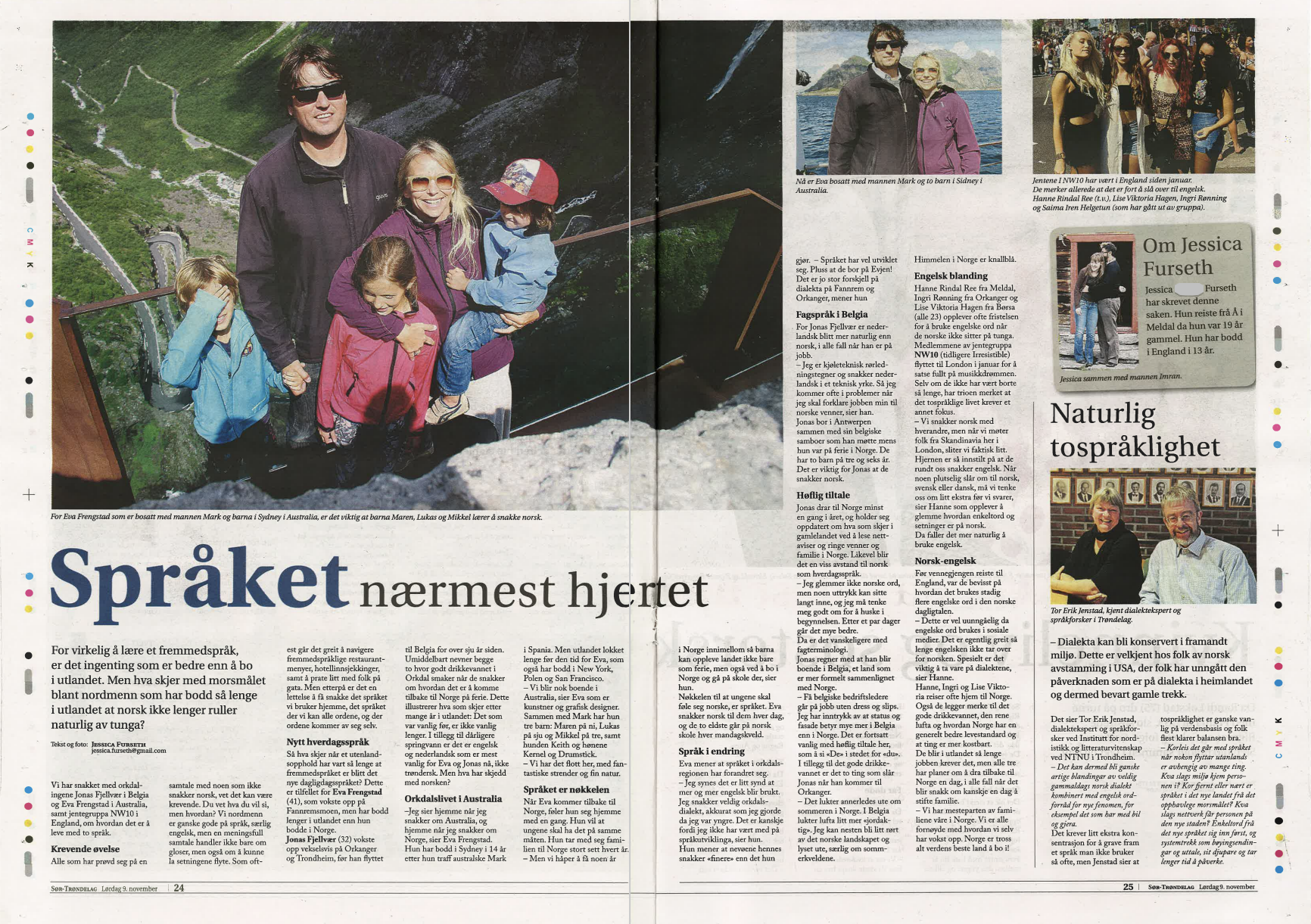
Sør-Trøndelag, November 2013.

Språket nærmest hjertet
Ingenting slår å bo i utlandet for å virkelig lære et fremmedspråk. Men hva skjer med morsmålet for nordmenn som har bodd så lenge i utlandet at norsk ikke lenger ruller naturlig av tunga? Vi snakket med Orkdalingene Jonas Fjellvær i Belgia og Eva Frengstad i Australia, samt jentegruppa NW10 i England, om hvordan det er å leve på to språk.

Alle som har prøvd seg på en samtale med noen som ikke snakker norsk vet det kan være krevende. Du vet hva du vil si, men hvordan? Vi nordmenn er ganske gode på språk, særlig engelsk, men en meningsfull samtale handler ikke bare om gloser. men også om å kunne la setningene flyte. Som oftest går det greit å navigere fremmedspråklige restaurantmenyer, hotellinsjekkinger, samt å prate litt med folk på gata. Men etterpå er det en lettelse da, å få snakke det språket man bruker hjemme, det språket der man kan alle ordene og de kommer av seg selv.

Så hva skjer når et utenlandsopphold har vart så lenge at fremmedspråket har blitt det nye dagligdagsspråket? Dette er tilfelle for Eva Frengstad (41), som vokste opp på Fannremsmoen men har siden bodd i utlandet lenger enn hun bodde i Norge. Jonas Fjellvær (32) vokste opp vekselsvis på Orkanger og i Trondheim, før han flyttet til Belgia for over sju år siden. Begge to nevner med en gang hvor godt drikkevannet i Orkdal smaker når de snakker om hvordan det er å komme tilbake til Norge på ferie, noe kanskje få lokalfolk tenker like mye på. Men detaljen illustrerer hva som skjer etter mange år i utlandet: det som var vanlig før, er ikke vanlig lenger. I tillegg til dårligere springvann er det engelsk og nederlandsk som er mest vanlig for Eva og Jonas nå, ikke trønder. Så hva har skjedd med norsken?

Orkdalslivet i Australia
– Jeg sier hjemme når jeg snakker om Australia, og hjemme når jeg snakker om Norge, sier Eva. Hun har bodd i Sydney i 14 år, dit hun flyttet etter hun traff australske Mark i Spania. Men utlandet lokket lenge før den tid for Eva, som har også bodd i New York, Polen og San Francisco. – Vi blir nok boende i Australia, sier Eva, som er kunstner og grafisk designer. Sammen med Mark har hun tre barn: Maren på ni, Lukas på sju og Mikkel på tre, samt hunden Keith og hønene Kernel og Drumstick. – Vi har det flott her, med fantastiske strender og fin natur.

Eva føler seg hjemme i Norge med en gang hun kommer tilbake, og vil at ungene skal ha det på samme måten. Hun tar med seg familien til Norge stort sett hvert år. – Men vi håper å få noen år i Norge innimellom så barna kan oppleve landet ikke bare som ferie, men også å bo i Norge og gå på skole der, sier hun. At nordmenn er litt mer jordnære er en av tingene Eva har lagt merke til etter hun reiste bort, men språket er nøkkelen til at ungene skal føle seg norske. Eva snakker norsk til dem hver dag, og de to eldste går på norsk skole hver mandagskveld.

Eva har vært borte fra Norge lenge nok til at hun legger merke til å språket i Orkdalsregionen har forandret seg. – Jeg synes det litt synd at mer og mer engelsk blir brukt. Jeg snakker veldig orkdalsk, akkurat som jeg gjorde da jeg var yngre. Det er kanskje fordi jeg ikke har vært med på språkutviklinga, sier hun. – Jeg hører at nevøene mine snakker ‘finere’ enn det jeg gjør. Språket har vel utviklet seg. Pluss at de bor på Evjen! Det er jo stor forskjell på dialekta på Fannrem og Orkanger.

Fagspråk i Belgia
For Jonas har nederlandsk blitt mer naturlig enn norsk, hvertfall når han er på jobb. – Jeg er kjøleteknisk rørledningstegner og snakker nederlandsk i et teknisk yrke. Så jeg kommer ofte i problemer når jeg skal forklare jobben min til norske venner, sier han. Jonas bor nå i Antwerpen, sammen med sin belgiske partner som han møtte mens hun var på ferie i Norge. De har to barn på tre og seks år, og det er viktig for Jonas at de snakker norsk.

Jonas drar til Norge en gang for året, ofte to, og holder seg oppdatert med hva som skjer i gamlelandet med å lese nettaviser og ringe venner og familie i Norge. Men likevel blir det en viss avstand fra norsk som dagligdagsspråk. – Jeg glemmer ikke norske ord, men noen uttrykk kan sitte langt inne og jeg må tenke meg godt om for å huske i begynnelsen. Etter et par dager går det mye bedre. Vanskeligere er da hvis en har lært seg noe nytt i utlandet, slik som fagterminologi, sier Jonas. Han regner med han blir boende i Belgia, et land som er mer formelt sammenlignet med Norge. – Få belgiske bedriftsledere går på jobb uten dress og slips! Status og fasade har jeg intrykk av at betyr mye mer i Belgia enn i Norge. Det er fortsatt brukelig med høflig tiltale her, å si ‘De’ i stedet for ‘du’.

I tillegg til det gode drikkevannet er det to ting som alltid slår Jonas når han kommer til Orkanger. – Det lukter annerledes ute om sommeren der. I Belgia lukter lufta litt mer jordaktig, det er vanskelig å beskrive. Jeg kan nesten bli litt rørt av det norske landskapet og lyset ute, særlig om sommerkveldene. Himmelen i Norge er knallblå.

Naturlig tospråklighet
Selv om Eva og Jonas holder nær kontakt med Norge har det nye livet i utlandet likevel blitt det normale. Begge går aktivt inn for å bevare norsken, og særlig Eva merker at dialekta hun tok med seg til utlandet ikke er helt den samme som brukes der hun kom fra lenger.

– Dialekten kan bli konservert i framandt miljø. Dette er velkjent hos folk av norsk avstamming i USA, der folk har unngått den påverknaden som er på dialekten i heimlandet og dermed bevart gamle trekk, sier Tor Erik Jenstad, dialektekspert og språkforsker ved Institutt for nordistikk og litteraturvitskap ved NTNU i Trondheim. – Det kan dermed bli ganske artige blandingar av veldig gammaldags norsk dialekt kombinert med engelsk ordforråd for nye fenomen, for eksempel det som har med bil å gjera.

Det krever litt ekstra konsentrasjon når man skal grave fram et språk man ikke bruker så ofte, men Jenstad sier at tospråklighet er ganske vanlig på verdensbasis og folk flest klarer balansen bra. – Kor det går med språket når noen flyttar utanlands er avhengig av mange ting. Kva slags miljø kjem personen i? Kor fjernt eller nært er språket i det nye landet frå det opphavlege morsmålet? Kva slags nettverk får personen på den nye staden? Enkeltord frå det nye språket sig inn først, og systemtrekk som bøyingsendingar og uttale sit djupare og tar lenger tid å påverke.

Engelsk blanding
Fristelsen for å bruke engelske ord når de norske ikke sitter på tunga er noe Hanne Rindal Ree fra Meldal, Ingri Rønning fra Orkanger, og Lise Viktoria Hagen fra Børsa (alle 23) ofte kommer ut for. Medlemmene av jentegruppa NW10 (tidligere Irresistible) flyttet til London i januar for å satse fullt på musikkdrømmen, og selv om de ikke har vært borte så lenge har trioen lagt merke til at det tospråklige livet krever et annet fokus.

– Vi snakker jo norsk med hverandre, men når vi møter folk fra Skandinavia her i London sliter vi faktisk litt. Hjernen er så innstilt på at de rundt oss snakker engelsk, så når noen plutselig slår om til norsk, svensk eller dansk må vi tenke oss om litt ekstra før vi svarer, sier Hanne, som snakker på vegne av gruppa. – Men det er ord og setninger vi glemmer hvordan er på norsk. Da faller det mer naturlig å si det på engelsk.

Selv før vennegjengen reiste til England var de bevisst hvordan det brukes stadig flere engelske ord i den norske dagligtalen. – Dette er vel uungåelig med tanke på bruk av engelske ord i sosiale medier. Men vi synes dette er greit så lenge engelsken ikke tar over for norsken. Særlig er det viktig å ta vare på dialektene!

Hanne, Ingri og Lise Viktoria reiser hjem til Norge ofte, der også de legger merke til det gode drikkvannet, den rene lufta, og hvordan Norge har en generelt bedre levestandard og ting er mer kostbart. De blir værende i utlandet så lenge jobben krever det, men alle tre har planer om å dra tilbake til Norge en dag, i alle fall når det blir snakk om å kanskje en dag stifte familie. – Vi har mesteparten av familiene våre i Norge, og vi er alle fornøyde med hvordan vi selv har vokst opp der. Norge er jo tross alt verdens beste land å bo i.

Skrevet av Jessica Furseth, som reiste frå Å i Meldal da hun var 19 år gammel og har bodd i England i 13 år.

The new world of work

Portfolio Magazine, autumn 2013. Original article here.

portfolio

The new world of work

The way we work is in a state of flux, as a Big Bang of technology, globalisation and sociological changes is sending shock waves through every aspect of life. We are in the midst of the biggest transformation the world has ever seen, even bigger than the industrial revolution – this is how Lynda Gratton describes the information revolution.

So it is no wonder the world of work is transforming too, as we have never been more connected and the possibilities have never been greater. As Professor of Management Practice at the London Business School, Gratton’s research on the future of work has made her a leading authority on how people operate in organisations, and what we can expect from a future with seemingly infinite information at our fingertips and the opportunity to collaborate with people anywhere on the planet.

“It is not even about the future anymore, as so many of these changes are happening right now,” says Gratton, pointing to how we are speaking on the phone from our respective homes, as both of us are writing today and that is easier when we are alone. “We will see even more advanced technology coming along, making it seem as if the person on the video link is sitting right in front of us. We will see much more sophisticated ways of handling knowledge in a firm, and we are going to see changes in management perspectives.”

As technology has finally become sophisticated enough for people to connect from a distance without a stuttering internet connection getting in the way, businesses must face the challenge: how do we manage this opportunity? The ability to securely access company files from afar means employers do not necessarily have to sit in the office to get things done. Parents can take a few hours out in the afternoon to see their kids before picking up work again later, while high-definition video conferencing is increasingly embraced by international corporations looking to cut down on travel. Are we headed for a future where being in the same room as your colleagues is only for special occasions?

“It is a complex issue, because it has to do with the character of the person, the character of the work, and the character of the organisation,” says Gratton. “It is also down to how complex the work is, and how much people rely on others for knowledge transfer.” Because having a job that can be done remotely does not necessarily mean the company wants you to. Yahoo!’s new boss Marissa Mayer caused a stir when she everyone to show their faces every day because the company had lost its culture. Gratton can understand why Yahoo! made this call, as her research through the ‘Future of Work’ consortium shows there are times when only face-to-face contact will do: “When work is very complex and has a lot of interdependency, it is difficult to really get knowledge transfer going when people are not in the same place.”

In addition to ‘Future of Work’, which draws on experience from over 60 companies, Gratton also leads the ‘Inclusion & Diversity’ consortium. The culmination of her research is presented in her book ‘The Shift’, which discusses how the world of work is fundamentally changing. A common feature among companies succeeding in this new reality is a solid grasp on how to facilitate good relationships between workers who are not in the same room, Gratton has found. This is not as easy as it may sound, as humans are social creatures who thrive on the rituals of tea rounds and weather chat. So is it really possible to foster team cohesion without these niceties?

“Running a virtual team is not the same as running a face-to-face team. You have to be a lot more thoughtful about how you introduce people, the way they understand who each other are, and how they prefer to work,” says Gratton. “You have to build processes that recreate what people do naturally. There are rapid developments in this field, both in terms of technology and practices.” For those used to working face-to-face, the thought of dealing with colleagues via chat rooms may sound horrifying. But it is already happening: collaboration specialist Yammer was acquired by Microsoft last year, as the technology giant is keen to incorporate nifty interaction features such as Twitter-style @-replies, hashtags for sorting discussion topics, and Facebook-esque ‘Likes’ to signal opinions.

This is second nature for the millennials, the generation born between 1980 and 1995, who often prefer instant messaging to the telephone. Raised on the internet, the millennials are also much less willing to forego the flexibility that technology now affords, looking to employers to provide flexi-time and personal development opportunities. This was the conclusion when PwC, aided by Gratton’s team at the London Business School, presented its large generational study into what millennials want from work. While younger workers may take more naturally to this shift, Gratton disagrees that a generational change may be needed before this trend can permeate the average company:

“I do not agree with that at all. I am a baby boomer myself, and when I run a World Economic Forum team I work with academics from all over the world, half of whom I have never met. … Obviously some people resent working virtually, but at any age there is going to be some people who think it is terrible. We are certainly getting used to it.” Most people will find themselves at a lower rung on the corporate ladder though, often dealing with managers measuring productivity by how many hours your coat is hung on the back of your chair. The issue of trust goes back to the attitude of the organisation, says Gratton, acknowledging there are certainly companies where ‘presenteeism’ is the golden standard. But as anyone who has had an office job knows, being present does not necessarily mean you are working. “What we have to do is change the way we measure performance,” says Gratton. “This is more complex than face-to-face management, meaning managers have to get better. It is a more difficult task.”

While ‘presenteeism’ is starting to lose its grip on UK workplaces, it is still a major issue in other markets such as Japan. Gratton thinks change is afoot also there, as the younger generation is bringing with them a desire for more flexibility, especially as child-rearing is increasingly a task for dad as well as mum. Still, Gratton is reluctant to call one way of management better than the other: “Take investment banks, where you have to work from 8am to 10pm. I do not know if that is the right deal, but anyone who joins knows that is the deal. The consequence is that they are not always going to be attracting the most interesting people,” says Gratton.

As the PwC study shows that younger people are increasingly skeptical of the merits of letting their work be their life, Yahoo! may well lose some of their employees over the decision to cut back on flexibility. But, concludes Gratton, but only time will tell if this ‘backlash’ was the right decision: “There are no rights or wrongs, just consequences. As a leader, you need to decide what sort of corporation you want to build.”

Screen Shot 2014-02-21 at 19.12.52

The Hedge Magazine Interview

Screen Shot 2018-07-19 at 14.47.15

Interviews with alternative investment company founders, leading fund managers and industry experts, published in Hedge Magazine from 2012 to 2020. 

Screen Shot 2015-09-25 at 14.09.10

* Erik Serrano Berntsen, CEO and co-founder of Stable Asset Management. “I was looking at starting businesses, and it so happened to be hedge fund businesses. […] What excites me is finding people who want to do something new, set up something they’re proud of, make money for people but also create working environments that are rewarding.”

Screen Shot 2015-11-27 at 15.36.28

* Gemma Godfrey, founder of Moo.la. “What’s exciting is that now, with technology, you can make it cheaper to provide this service to people. If you can lower the cost of providing this service, then you can open it up to more people.”

Screen Shot 2016-05-24 at 13.08.14

* Carl Hall, partner at Alder private equity and author of The Environmental Capitalist. “In five-ten years from now, everything is going to be electric or plug-in hybrid. Those technologies are completely taking over,” asserts Hall. “Once change starts, it goes much faster than you think.”

Screen Shot 2016-02-01 at 17.21.30

* Jean-Francois Comte, co-founder and managing partner of Lutetia Capital. “This may explain why Comte is so methodical when talking about how Lutetia gets its edge: “People can come out of that environment with something of a military thinking – there’s this discipline. In M&A, at that level, there’s no margin for error. One of our staffers used to say to new recruits: ‘The difference between this and war, is that you get to go home’.”

Screen Shot 2014-10-13 at 18.19.20

Dixon Boardman, founder and CEO of Optima Fund Management. “I have befriended many of the managers we have money with. I’ve got to know them well and see them socially, and I know their children. It’s old-fashioned, but I think to know someone really, really well, to know what’s going on in their lives, means you know when they’re focused. […] But let me tell you, we don’t always get it right!” Boardman laughs. “But we get it right more often than we get it wrong.”

Screen Shot 2015-08-04 at 17.09.05

* Ramon Vega, founder and CEO of Vega Swiss Asset Management. “What you’re trying to do, as manager, is make your people feel good, and feel important. Then they are loyal to you, because you made them feel like that. Then you start to have a winning team around you.” The problem is that lots of bosses actually don’t like managing: “They want to go and fix it themselves! But I don’t know any football manager who goes onto the pitch himself if the striker doesn’t score.”

Screen Shot 2016-03-30 at 19.25.17

* Lee Freeman-Shor, portfolio manager at Old Mutual European Best Ideas fund, and author of The Art of Execution. “I’ve always had a natural interest in what’s now called behavioural finance psychology. … I suppose my natural interest in psychology led me to look in the right areas to solve that problem: how the best investors can be wrong most of the time, and still make a ton of money.”

Screen Shot 2015-04-08 at 16.16.03

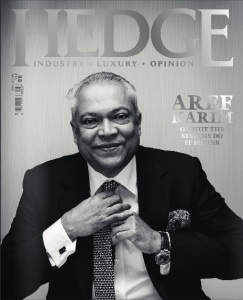
* Aref Karim, CEO, CIO and founder of Quality Capital Management. “Why does QCM exist? Why are you running the business still?’ It’s because I’m very passionate about it, and more importantly it’s because there’s almost a philosophical and societal purpose behind it.””

Further interviews:

Straight to work

Businesslife, October 2013. Original article (p48-50).

BL oct13Why millennials are skipping university to go straight to the office
University is no longer the obvious choice for star candidates once their A-levels are done and the certificate is neatly framed. With soaring tuition fees and declining salary premiums after graduation, talented young people are increasingly choosing to forego life on campus. As industrious youngsters are champing at the bit to get to work, companies are finding they need to look beyond the graduate pool or risk missing out on top talent.

18-year-olds are finding increasingly more training schemes tailored especially for them, offered by future-minded companies looking to foster talent. Law, banking and accountancy are industries which have long picked up people at a young age, but as businesses are waking up to the fact that university is not the only route for the best and brightest, the trend has spread to technology, consultancy, engineering and marketing.

With tuition fees up to £9,000 per year, students who take out full loans will now emerge with a debt of at least £43,500 at the end of their degree. This is a significant burden when considering the graduate premium, traditionally cited to be £100,000 in extra earnings over a lifetime, has fallen by almost a third in the 15 years since 1993, according to research from the University of Essex. Consequently, UK university applications fell by 6.6% in 2012, and although 2013 is shaping up a bit better, this year’s UCAS figures are still below those of 2010, as prospective students are questioning whether university is worth it after all.

“It’s certainly a financial decision for students, but it’s also a lifestyle decision. Do I really want to go to university? Will I get a job in the area I want afterwards?” says Shelley Kendrick, director at recruitment specialist Kendrick Rose in Jersey. A bursary scheme, sandwich degree, or on-the-job training, may be a better bet for many. “For the organisations it’s about finding the right people for them, and a lot of that is about culture, competency, confidence, initiative and drive. Working is very different from university and a degree doesn’t give you common sense,” says Kendrick. “Communication and teamwork – those are the things employers are looking for now.”

Recruiting straight from school is a particularly important consideration for Channel Island employers, says Chris Usher, director of commerce and senior lecturer at Jersey International Business School (JIBS). “Although historically a somewhat fixed model on the island, going away to university is not necessarily right for everyone,” says Usher. JIBS offers a two-year degree in International Financial Services, awarded by the University of Buckingham, where students go to school part of the week and also get paid to work at either HSBC, RBSI, UBS or Standard Chartered.

“What the banks are getting out of this is to recruit that top quality talent. Traditionally there was a danger Jersey would lose some of the best and brightest as they go off to university to the UK and maybe not to return, or to return much later in their career,” says Usher, who plans to offer law and wealth management placements in the next year.

Usher agrees that it takes “a very committed individual” to study and work at the same time, a lifestyle that certainly leaves less time for partying. This will be a concern for a fair few 18-year-olds, meaning the trick for the companies is to identify the ones who will be worth the investment.

“Yes, they are young,” acknowledges Evelyn Brady, partner at PwC in Guernsey, “but our HeadStart programme particularly addresses people who come straight from school. We hold assessment event days, and we make sure the candidates understand what they are signing up for. If they join a firm like ours they have to commit to actually studying. We make sure they choose the right route, and that they have the right mentors to help them develop.”

Brady describes the success from PwC’s school-leaver programme as “phenomenal”, with the number of applications rising each year. Although there is always a risk that people may leave after their training, Brady says this is no more likely with the A-level students than any other age group. Hiring young candidates also mean an opportunity to raise people in the company culture, creating a degree of loyalty. Not to mention the benefit to the office of injecting some fresh blood every year: “We get people from different generations working together, contributing different insights. It’s important for us to be on top of changing dynamics in the workforce.”

Because joining a company like PwC means taking formal industry exams, Brady does not think the A-level recruits will lose out financially later in life by forgoing university: “Not if they are very, very disciplined, no. They need to do the exams, and they need to do an international rotation to show they can operate in environments beyond the Channel Islands. But if they do this, their opportunities are the same as anybody else’s.”

Events aimed at identifying talent from the school-leaver pool are run also by RBC, where promising candidates will be guided through professional exams. “Our focus is on providing robust and dynamic training to help attract, retain and develop young talent, irrespective of whether they have been to university,” says Alison Creed, joint head of RBC Corporate Employee & Executive Services in Jersey. “Many who have come through on the ‘Advance to Work’ scheme now have permanent positions at the company.”

Jackie Hankin, HR leader at EY (Ernst & Young) Channel Islands, says the company is seeing a rising number of candidates come through on the company’s school-leaver route: “There are lots of talented people out there who aren’t going to university, so if we didn’t recruit from that pool, we would miss out.” Once the Association of Certified Chartered Accountants exams are completed, the school-leavers stand at the same level of opportunity as anyone else at EY, says Hankin. “We want to build relationships for life. It’s a two-way street: the better the people who work for us, the better we are able to service our clients.”

But while opportunities abound for A-level students willing to put in the hard graft, no one interviewed for this article believes we are headed for a future where university will be obsolete.

“There will always be the gravitas and the caliber of a degree,” says Shelley Kendrick; this is true especially in certain industries or in companies where they really want to see a diploma from Oxbridge. University is also a valuable lesson in independence, and for many a necessary time to grow up a bit more before choosing a career. “You will get star graduates and run-of-the-mill graduates, and it’s the same with A-level students,” says Kendrick. “The stars will always stand out, and it’s up to organisations to recognise them.”

While agreeing that universities will remain relevant, Evelyn Brady believes companies are waking up to the fact that further education is not for everybody: “By ignoring people who don’t choose university you can certainly miss out on some top talent. At PwC we want to get the intake mix right. If we didn’t recruit school-leavers as well as graduates, we would run the risk of losing out on local talent.”

Screen Shot 2014-02-21 at 19.06.10